
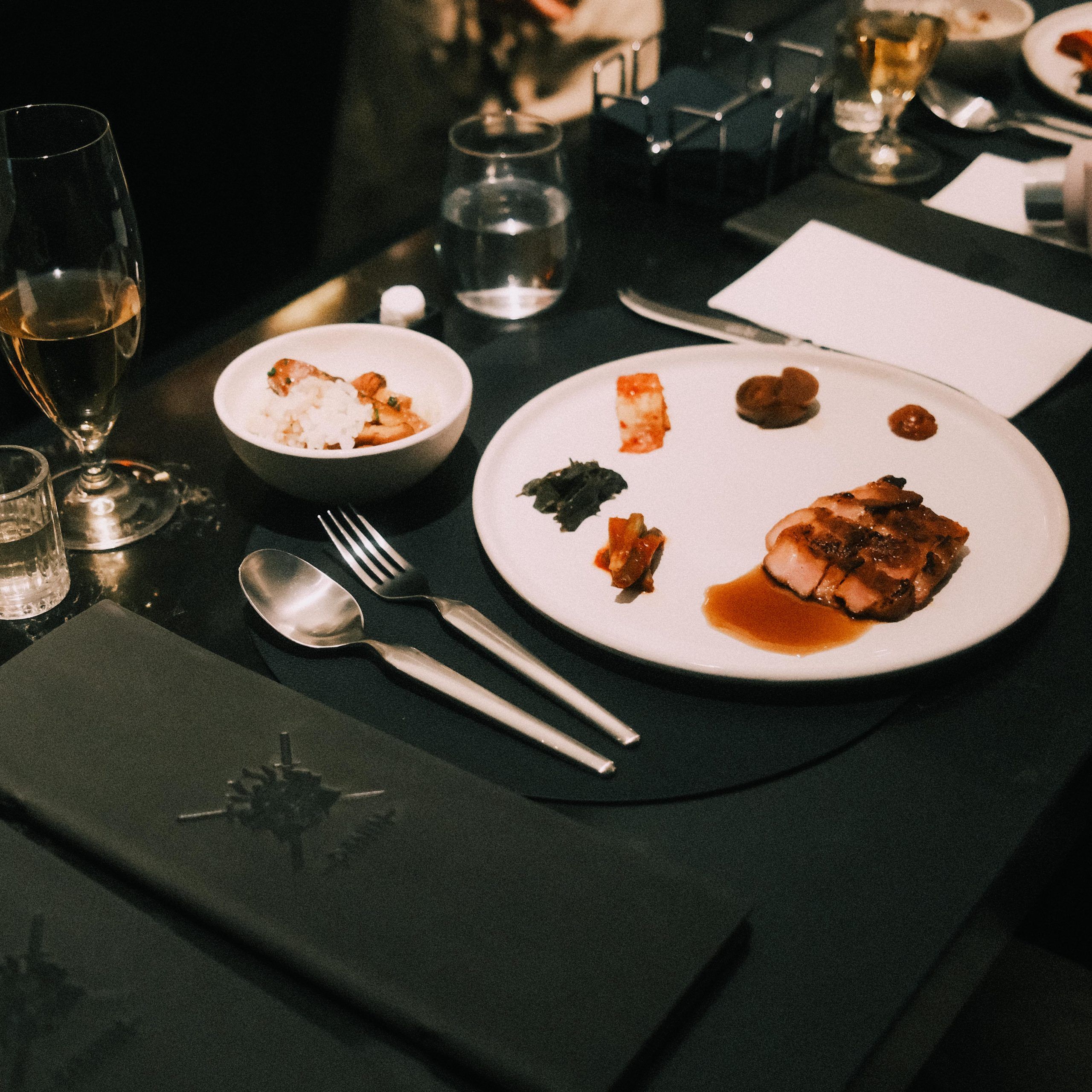
Banchan are the small side dishes served with rice at a Korean meal, set beside the main plate rather than ahead of it. The word splits into ban, meaning rice or meal, and chan, meaning side dish, and the family runs from kimchi and pickles to seasoned vegetables, braised and pan-fried dishes, as the Taste Korean Food guide to banchan sets out. At Rōnin Ōmakase on Little Collins St in the Melbourne CBD, every banchan and every ferment is made in house.
That last line is the point of this page. In Korea banchan are the everyday part of the table, placed in the middle to share, and the same guide notes that most restaurants there refill them for free. At a ten seat counter serving about ten courses over roughly two hours, they are not a bowl on the side. They are part of the cooking, which changes how they are made.
Rōnin opened in 2023 and turned to Korean cooking in 2026, the year Chef Liam Lee took over the counter. The kitchen has made its own banchan and ferments since then. Buying them in would be the easier path. The cooking rests on fermentation, on jang (the soybean and chilli pastes at the base of Korean food) and on charcoal, with Australian produce in season, and the banchan draw on the same ferments and the same jang as the courses around them. The Korean omakase in Melbourne page describes that base in full.
Chef Liam Lee trained at Gyungbokgung Hanjungsik in Seoul before more than ten years leading Australian kitchens, among them Nomad, Firebird and Studio Amaro. Hanjungsik is the multi-course Korean table, and its structure is part of why small dishes have a place at this counter. His background is on the chef page.
If you are weighing this against a Japanese counter, the short version is that the format is the same and the kitchen is not. How Korean omakase differs from Japanese omakase covers the rest.
There is no printed menu at Rōnin and nothing to order, so which banchan appear on a given night, and where they sit among the roughly ten courses, is not published before a sitting. The reason is the same one behind every course: the produce and the chef decide, and the thinking is set out in why there is no printed menu.
What you can count on is the counter itself. Ten seats face Chef Liam Lee, each course is finished in front of you and handed straight across, and a full sitting runs about two hours. The gallery shows the plates as guests see them, small dishes included.
One policy to read first. Rōnin runs on a single chef, and the FAQ states it plainly: the kitchen cannot cater to dietary alterations. That applies to the banchan as much as to the main courses, so if that line matters to your party, settle it before you pay.
Rōnin Ōmakase is at 445 Little Collins St, Melbourne CBD, and the counter runs Wednesday to Saturday from 6pm to 11pm. The omakase is from A$195 per guest at the soft launch price, paid in full at the time of booking. Price, late arrival and cancellation terms are on the FAQ.
Seats for the next month open at 8pm on the 20th of each month, and reservations are made online through OpenTable. For a group or a private event, email info@roninomakase.com instead. When the date you want is open, book a seat at the counter.